Honda evaluates exhaust sound through pulsation, depth and sportiness - but its sound-development work is not aimed at making every motorcycle sound alike. In a follow-up interview published by Moto.it on November 18, 2026, Honda noise, vibration and harshness specialist Takatoshi Tatsumi explains that approach and offers a personal view on electric motorcycles: they need not imitate combustion engines.
A vocabulary for what riders hear
The three evaluation axes give engineers a shared language for something riders experience subjectively. Tatsumi says development once depended more heavily on individual expertise, making it difficult to describe the desired result consistently. Accumulated research has helped turn those individual judgments into common parameters for development.
That technical vocabulary is separate from the musical terms he uses to explain the experience. Rhythm is the pulse generated by the interval between firing events. Harmony describes how sounds interact to produce a clear or muffled tone. Crescendo is the anticipation that builds as the sound becomes more present with rising engine speed. For Tatsumi, the important connection is how that sound responds to the throttle, rather than an engine note heard in isolation.
Good sound is not simply more sound
His definition of good sound combines timbre with volume. An appealing tone can still become intrusive if it is too loud for the situation. The target is therefore not simply a particular note or the strongest possible pulse, but a sound whose level and response fit the riding experience.
Tatsumi’s starting point is that even a sound he personally enjoys is unacceptable if it has a negative effect on society. He explains that noise approval concerns the complete motorcycle, not just its exhaust, so acoustic development demands an understanding of the whole vehicle. In his view, regulatory constraints can also prompt useful arguments between engineering disciplines about which compromises to accept - and sometimes lead to creative solutions.
Honda’s earlier account of this work, published on September 3, described evaluations both at the rider’s ear and from the perspective of people beside the road or sharing urban spaces. Digital simulation supports development, but testing on the actual motorcycle remains necessary, with human perception deciding the final result.
No single Honda voice
Nor is there one mandatory Honda voice. Tatsumi tells Moto.it that established models have a sonic tradition to respect, while sound remains part of quality control across the range. Being instantly identifiable by ear is not a universal target: a distinctive voice matters more to some motorcycle concepts than others.
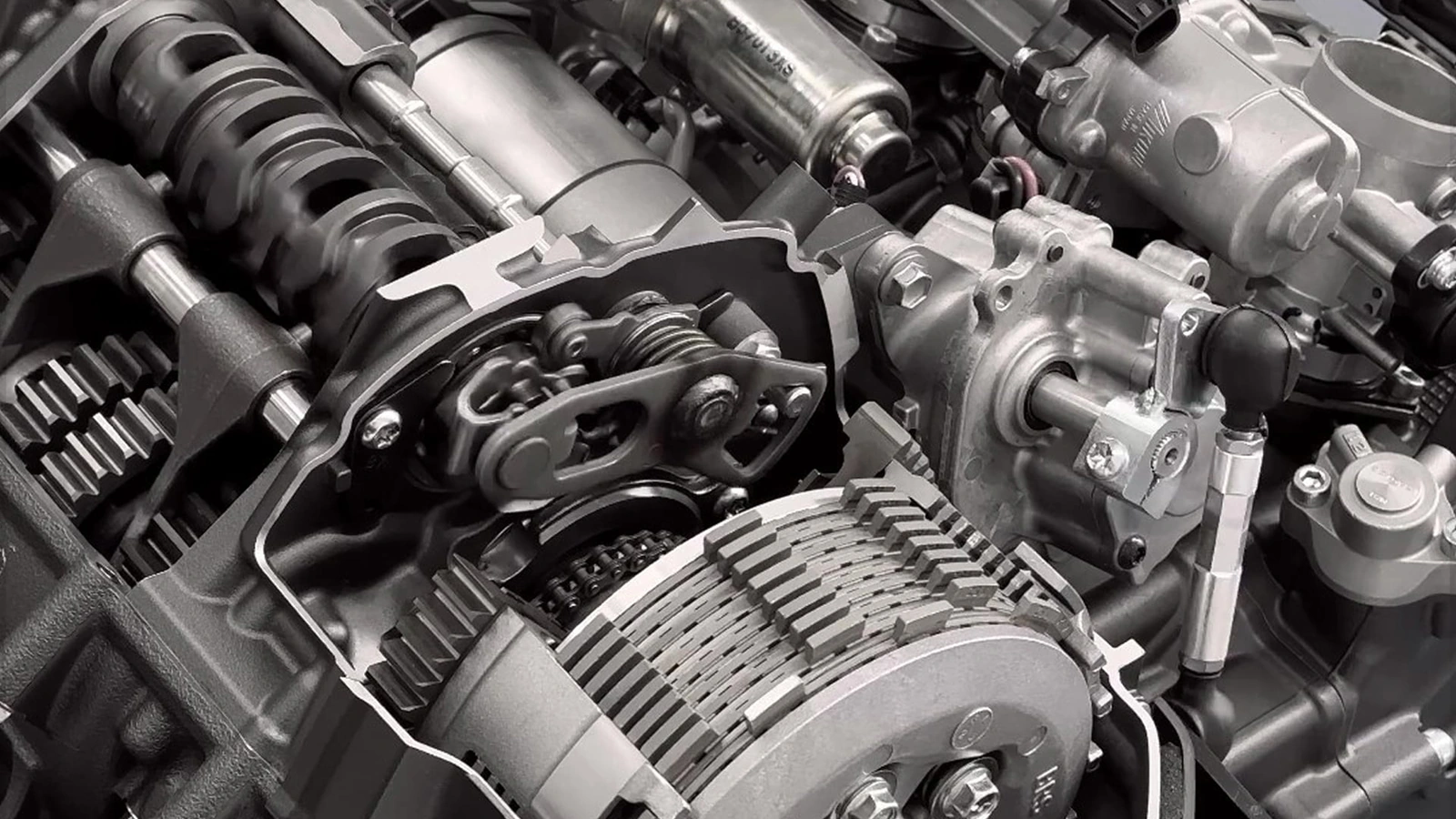
Those priorities influence how early sound requirements enter development. Where a particular acoustic character is central to the concept, it can shape combustion specifications. Where power, cost or performance take precedence, Tatsumi says sound design must not become an obstacle. Honda’s September explanation placed NVH specialists at the specification stage of new engines, when ignition and valve timing are being established.
The exhaust then shapes what is already there. Tatsumi describes its principal role as suppressing unwanted elements of the engine’s sound. That still leaves considerable development work: during CB750 Hornet development, he recalls the team trying nearly a hundred different patterns to test the sound.
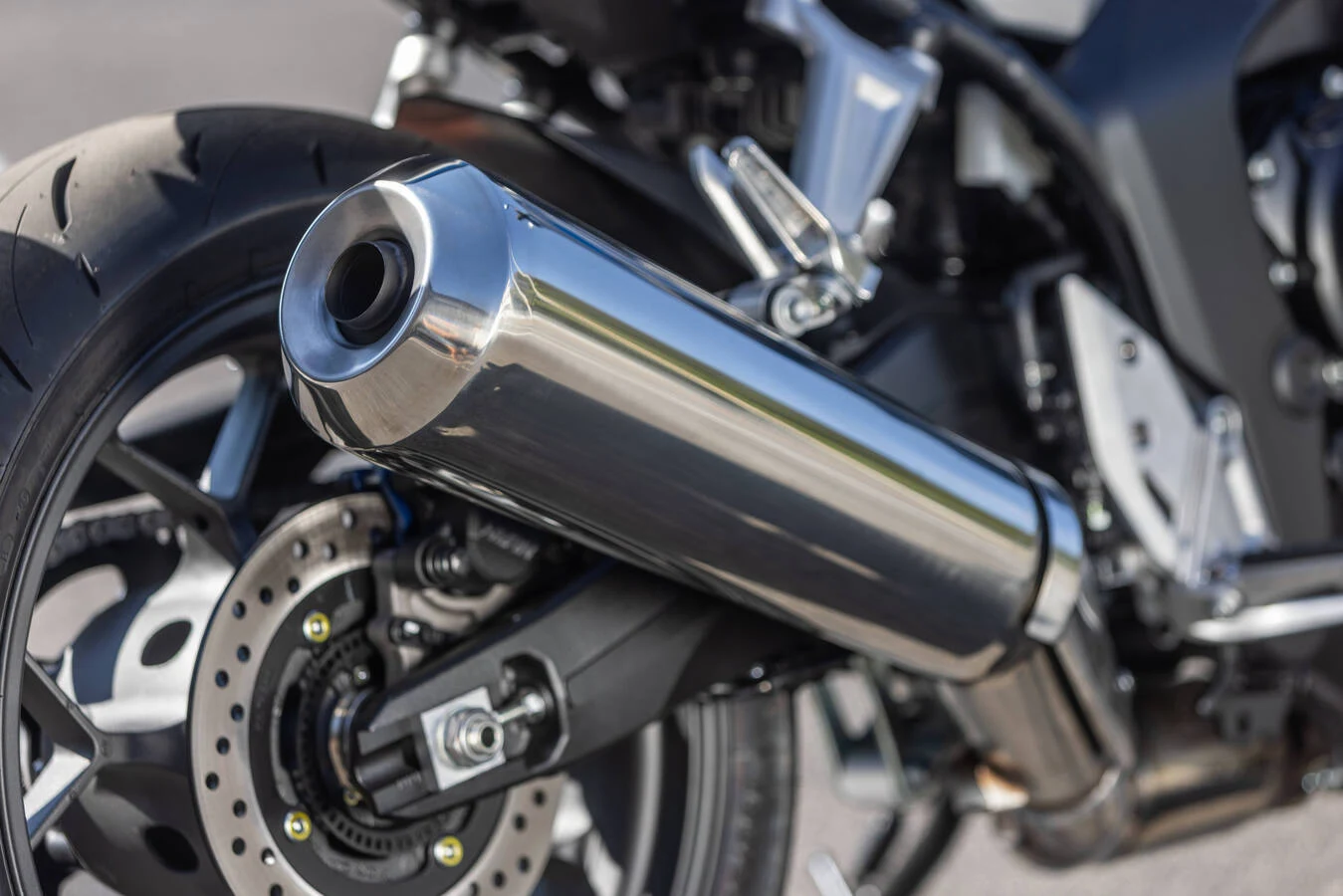
The Hornet and XL750 Transalp introduced for the 2023 season provide a concrete example. Honda says their dual tailpipes were tuned to different frequencies to create a pulse that builds with engine speed. Revisiting those bikes in the new interview, Tatsumi describes the difficulty of pursuing the desired sound without also raising volume, introducing unpleasant components or compromising motorcycle performance.
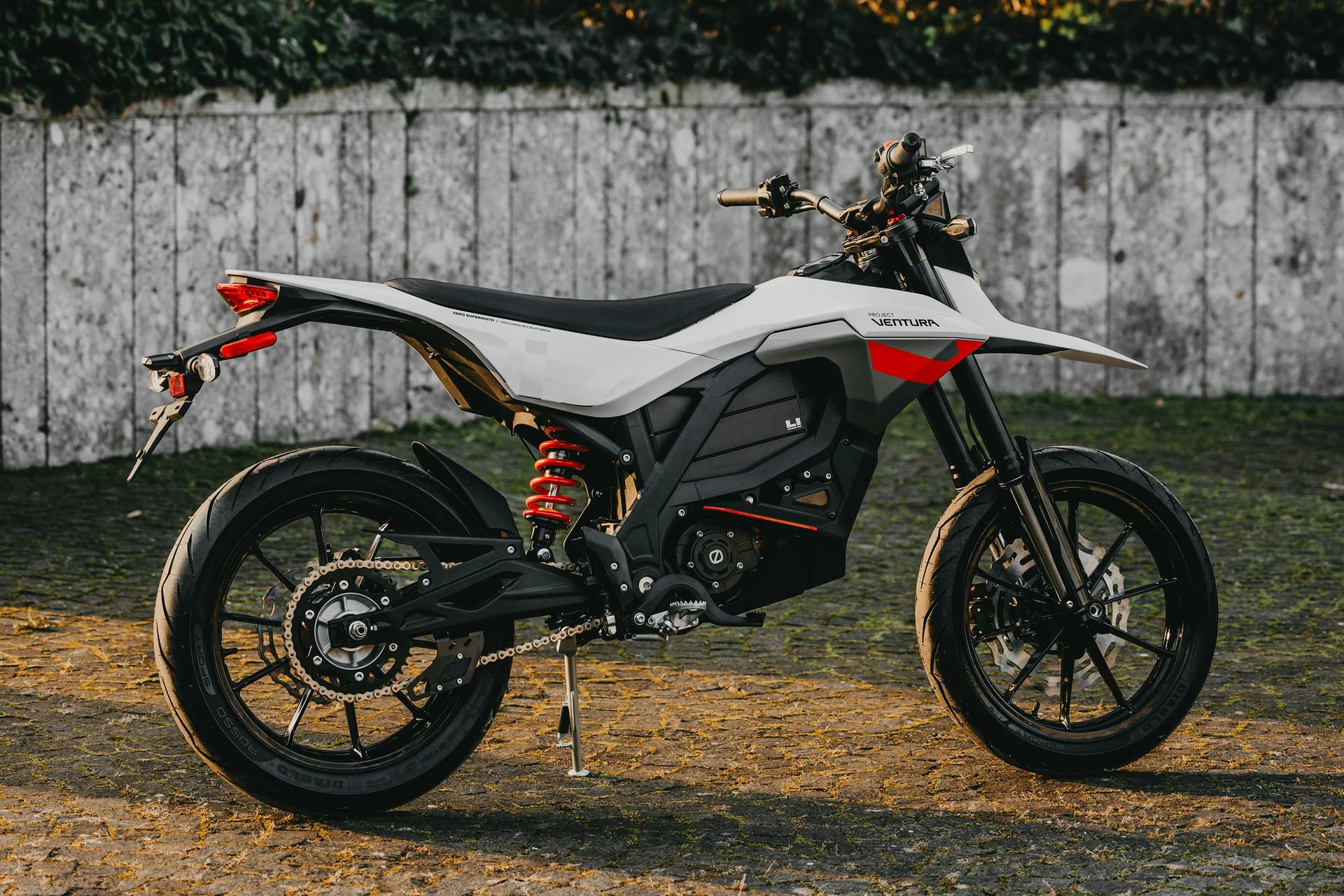
Electric bikes need not copy combustion
Electric motorcycles pose a different question. Tatsumi’s view is that they do not need artificial sounds that force them to resemble combustion engines. That is his perspective on their potential character, not an announced Honda policy against synthetic sound.
Instead, he sees the possibility of developing an original musical character around quietness. He also acknowledges that he does not yet have a clear answer for how to achieve it: an ambition for electric-bike sound, rather than a finished engineering solution.