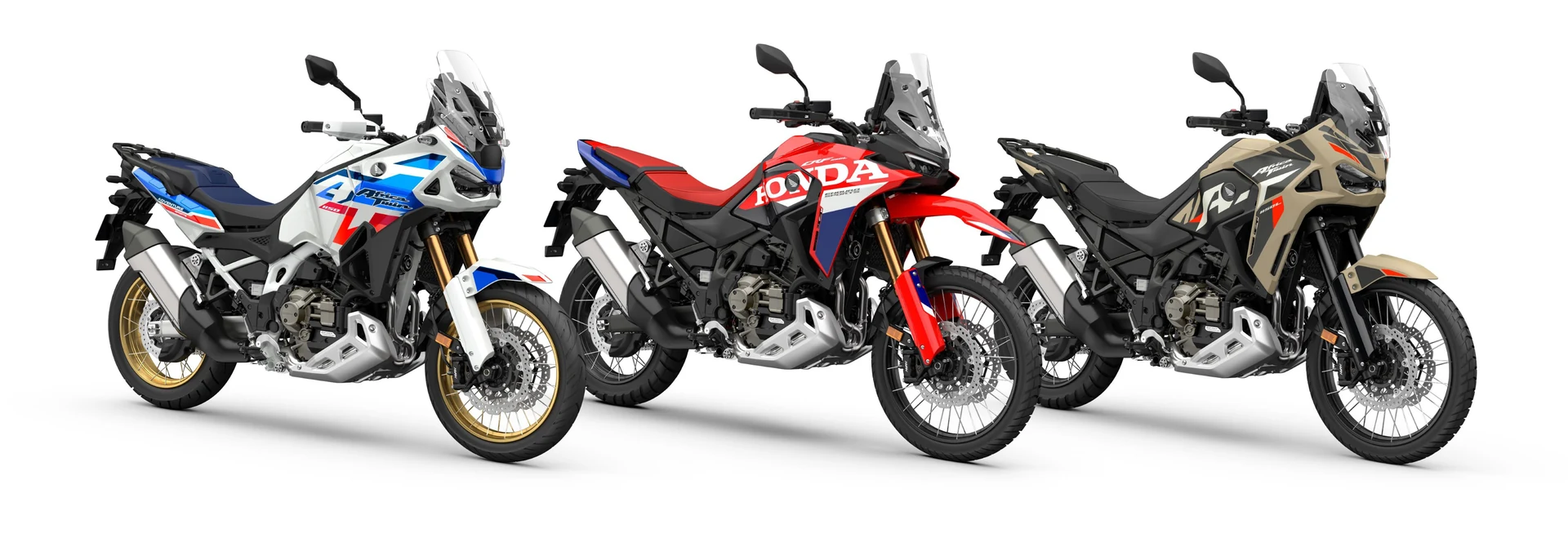
Honda's new SENSING RIDE package connects front and rear radar with the Africa Twin's dual-clutch transmission, allowing adaptive cruise control to assist through a stop and subsequent start. Introduced at EICMA on November 3, the system debuts as an option on the 2027 CRF1150L Africa Twin Adventure Sports DCT—not as standard equipment across the Africa Twin range. Its functions extend beyond cruise control to following-distance assistance and warnings about traffic ahead and behind.
Why Stop & Go needs DCT
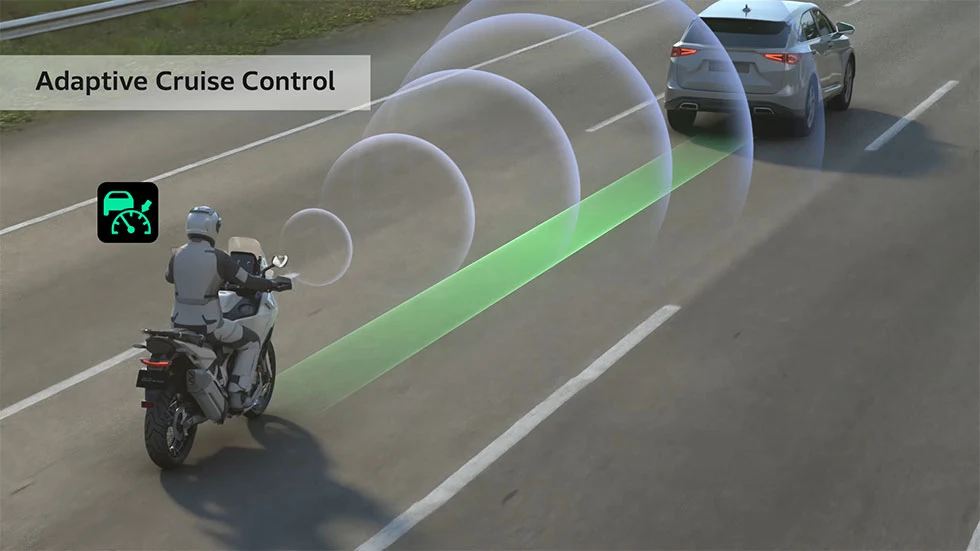
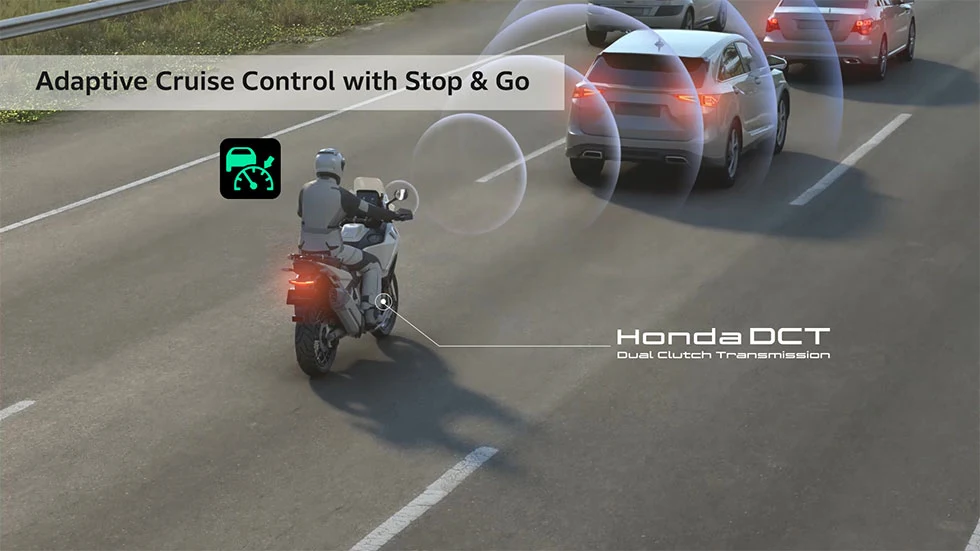
Adaptive Cruise Control, or ACC, supports a selected speed and following distance from the vehicle ahead. Stop & Go extends that assistance into stop-start traffic: Honda says the combination with DCT can bring the motorcycle to an automatic stop and assist with starting again. The transmission is central to that capability, rather than simply another convenience fitted alongside the radar.
DCT uses two clutches and automates clutch operation and gear changes. That gives the assistance system a transmission that can manage the clutch and shifting through the stop/start sequence, without the rider having to operate a conventional clutch lever. It is the mechanical link that makes this more than a cruise-control update.
Group riding and following-distance assistance
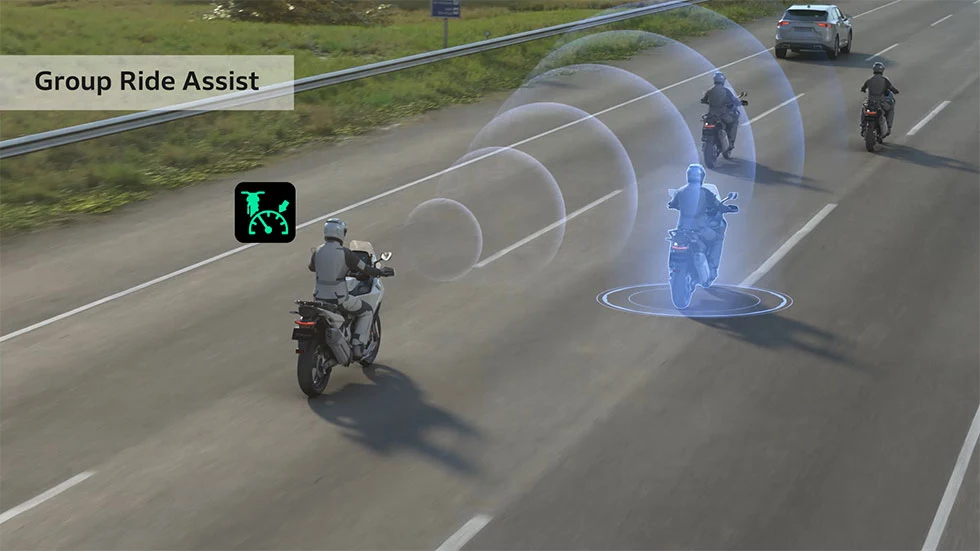
Group Ride Assist is another extension of ACC. It helps riders maintain following distance and consistent positioning within a group, including a staggered formation. The distinction matters: the function addresses spacing within that formation, rather than steering the motorcycle into position.
Distance Assist covers a different situation: approaching a vehicle ahead while the rider is applying throttle. It adjusts following distance under that positive throttle input. Unlike the basic explanation of ACC, this function explicitly involves the rider controlling the throttle while the assistance manages the gap.
Braking assistance is not the same as a warning
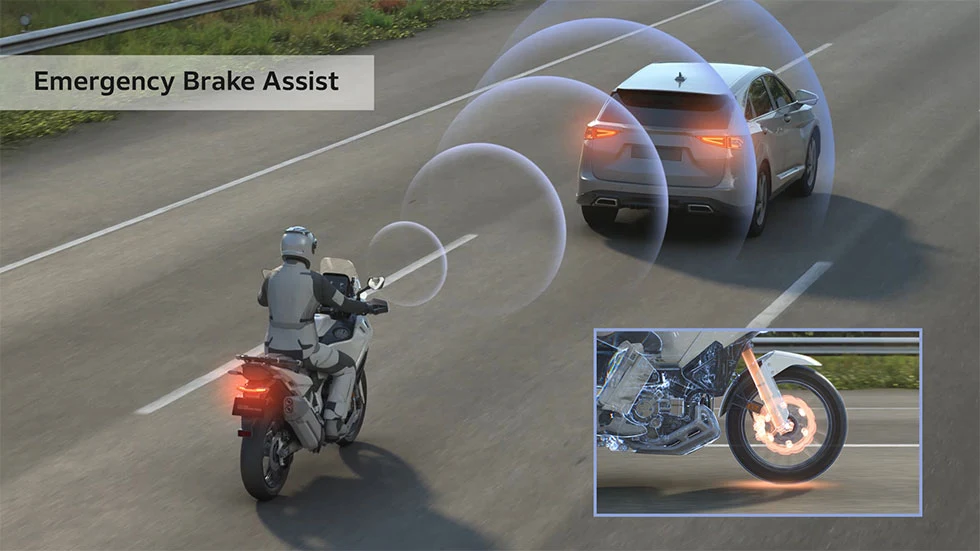
Emergency Brake Assist also depends on rider input. When a collision risk with a vehicle ahead is detected, it adds braking assistance as the rider brakes. That is not the same as autonomous emergency braking: the announced function supports a braking action the rider has initiated.
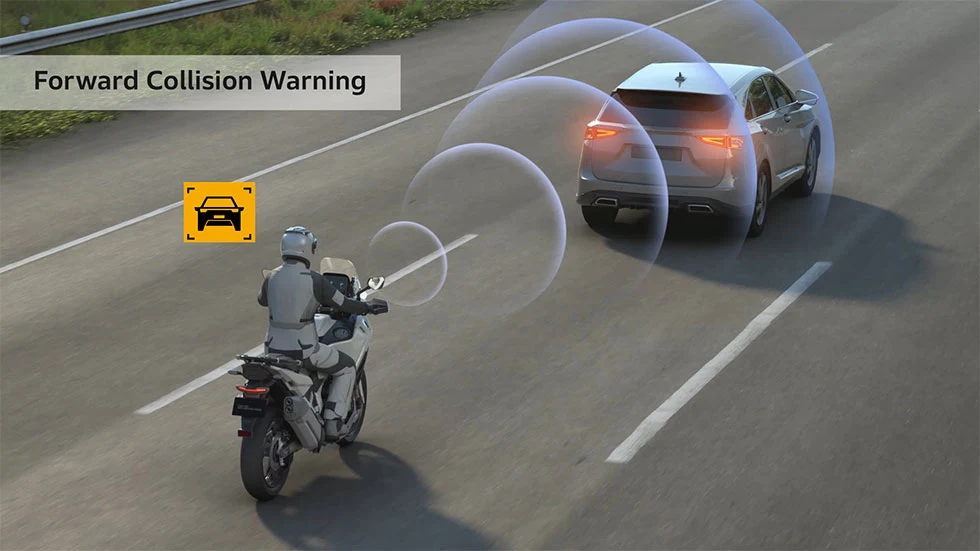
Forward Collision Warning is separate again. It displays an alert on the instruments when a potential collision with a vehicle ahead is identified. Honda also includes a function called Brake Pulse, which supplements that warning to draw the rider's attention to the risk.
What the rear radar does
At the rear, Blind Spot Information alerts the rider to a vehicle diagonally behind the motorcycle by illuminating or flashing an indicator on the mirror. Its purpose is notification, not an automatic lane-change intervention.
The other rear-facing functions have different audiences. Rear Distance Information puts a notification on the instruments when a vehicle approaches from behind. Rear Collision Warning instead flashes the motorcycle's indicators to warn following traffic of a potential collision risk.
These are rider-assistance functions, not a substitute for watching traffic and controlling the motorcycle. Honda cautions that their recognition and control capabilities have limits, and that road, weather and vehicle conditions can affect whether they operate as intended.
The Adventure Sports beneath the electronics
The motorcycle carrying the system uses a liquid-cooled 1,131cc parallel twin, rated at 117hp (87.5kW) at 7,500rpm, with a claimed 119Nm of torque. SENSING RIDE is therefore one part of the new Adventure Sports specification, rather than a standalone radar accessory for any Africa Twin.
Showa EERA electronic suspension with Honda Skyhook control handles damping adjustment in response to the motorcycle's movement. That is a separate control system from the radar assistance: it manages suspension damping rather than traffic spacing or collision warnings.
Honda's provisional German specification for the SENSING RIDE version lists spoked wheels measuring 19 inches at the front and 18 inches at the rear. A 49mm fork provides 210mm of travel, with 200mm at the rear, while front braking uses twin 310mm discs. The seat has 830mm and 850mm height settings.
The German version also lists heated grips, Smart Key and an electrically adjustable windscreen. Seat heating and a centerstand are optional. Those distinctions remain useful even on a technology-led model: the radar package does not make every touring convenience standard equipment.
Price and availability
US and German pricing, the SENSING RIDE option premium and delivery dates are still to be confirmed, as is US availability.