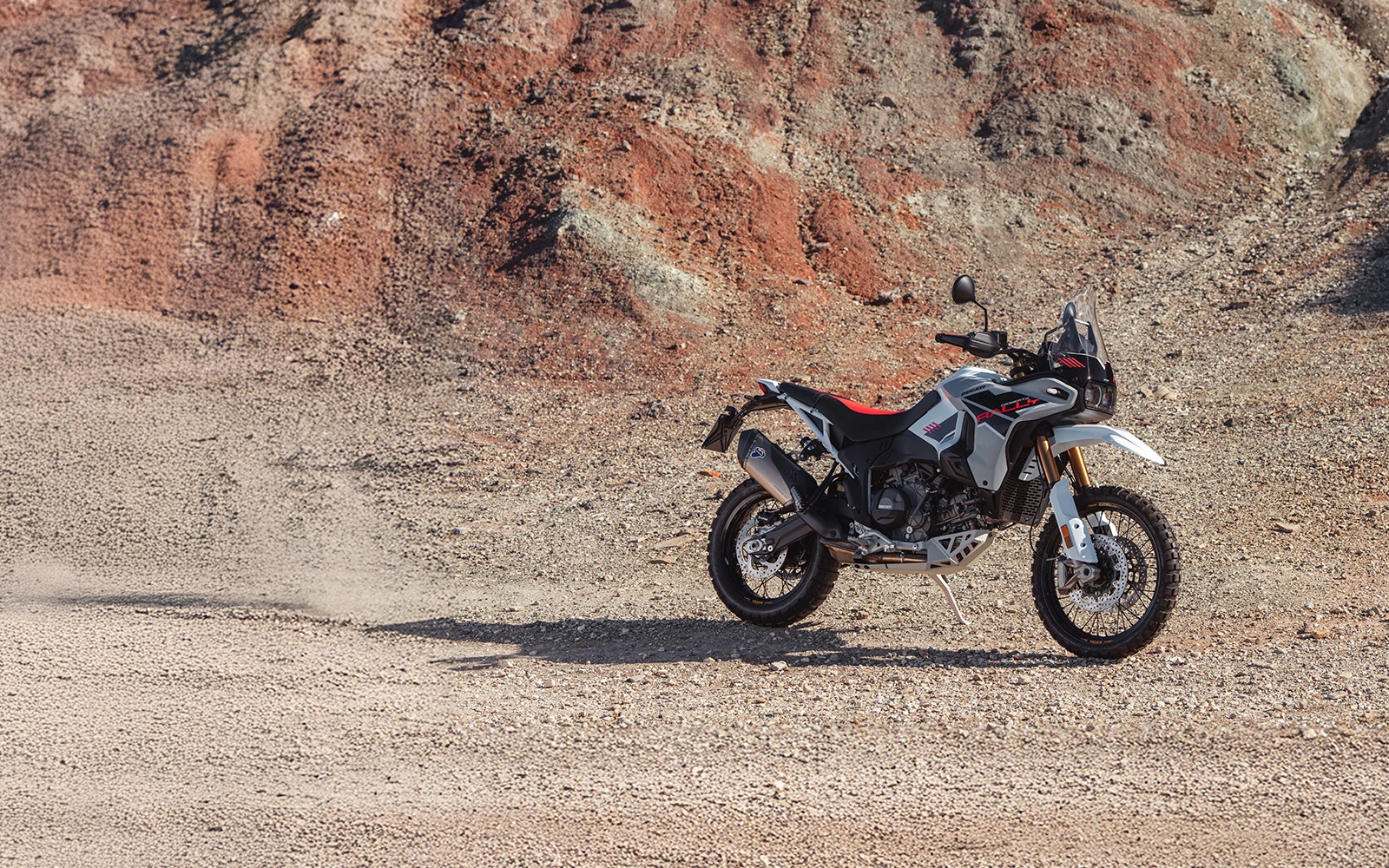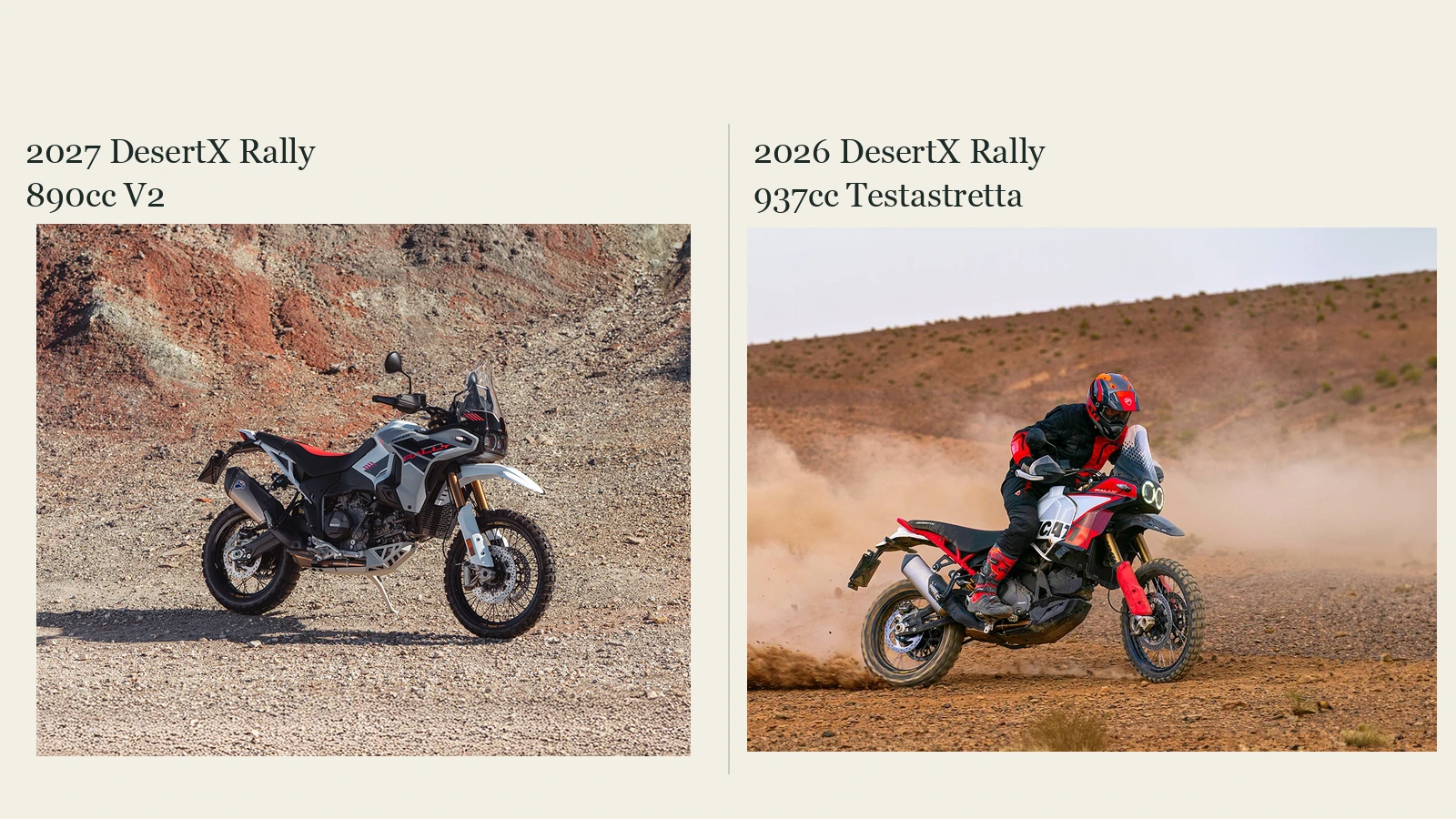
The 2027 Ducati DesertX Rally is a stronger proposition for riders who want tubeless wheels, a lower standard seat and longer intervals between valve checks. Its new 890cc V2 and monocoque frame bring a substantial mechanical redesign, but the 2026 Rally already has the same 250mm front and 240mm rear suspension travel. The older 937cc bike also carries three litres more fuel. Choosing between them is about those practical differences, rather than a leap in peak power.
| Specification | 2027 DesertX Rally 890US / Italy | 2026 DesertX Rally 937US specification |
|---|---|---|
| Engine | 890cc 90° V-twin; spring valves; variable intake timing | 937cc Testastretta 11° V-twin; desmodromic valves |
| Claimed power | 109hp (81.1kW) | 109hp (81.0kW) |
| Claimed torque | 92.0Nm | 92.0Nm |
| Transmission / clutch | Six-speed, up/down DQS 2.0; wet slipper clutch | Six-speed, up/down DQS; wet slipper clutch |
| Manufacturer weight | 209kg wet, without fuel | 211kg wet, without fuel |
| Full-tank weight¹ | 222.3kg / 490.1lb (est.) | 226.5kg / 499.4lb (est.) |
| Claimed power / full-tank weight¹ | 0.489hp/kg (est.) | 0.479hp/kg (est.) |
| Front / rear suspension | 48mm KYB closed-cartridge fork; KYB Full Floater shock; adjustable; 250/240mm travel | 48mm KYB closed-cartridge fork; adjustable KYB shock; 250/240mm travel |
| Brakes | Twin 305mm front discs, Brembo monobloc; 265mm rear; cornering ABS | Twin 320mm front discs, Brembo monobloc; 265mm rear; cornering ABS |
| Wheels / tyres | 21/18-inch tubeless spokes; Scorpion Rally STR, 90/90 front, 150/70 rear | 21/18-inch spokes with inner tubes; Scorpion Rally STR, 90/90 front, 150/70 rear |
| Seat height | 900mm | 910mm |
| Fuel capacity | 18.0 litres | 21.0 litres |
| US price | $19,995 + $995 destination — US | $23,395 + $995 destination — US |
| European price | €19,990 — Italy; includes 22% VAT | — |
¹ Full-tank estimates add 18 litres or 21 litres of petrol to the quoted weights without fuel, at approximately 0.74kg per litre. These are estimates, not measured weights. Prices are for the stated model years and markets; actual dealer prices can differ. Power-to-weight estimates are for the motorcycle without a rider.
Similar output, a different service schedule
The new DesertX Rally replaces the Testastretta's desmodromic valve gear with coil springs and adds variable intake timing. Claimed output is 109hp (81.1kW) at 9,000rpm, against 109hp (81.0kW) at 9,250rpm for the 937cc engine. Both claim 92Nm, although the new engine's peak arrives at 7,000rpm rather than 6,500rpm. Those peaks leave little reason to choose on maximum output alone; they do not tell us which bike pulls harder at low revs.
The service schedule provides a clearer distinction. Valve-clearance checks move from 30,000km on the 937 to 45,000km on the V2. The new bike needs an oil service every 15,000km or 24 months and an annual service every 12 months; the old bike lists a 15,000km or 24-month maintenance interval. For a high-mileage owner, the longer gap between valve checks is a concrete reason to favour the new engine.
What changes in the chassis
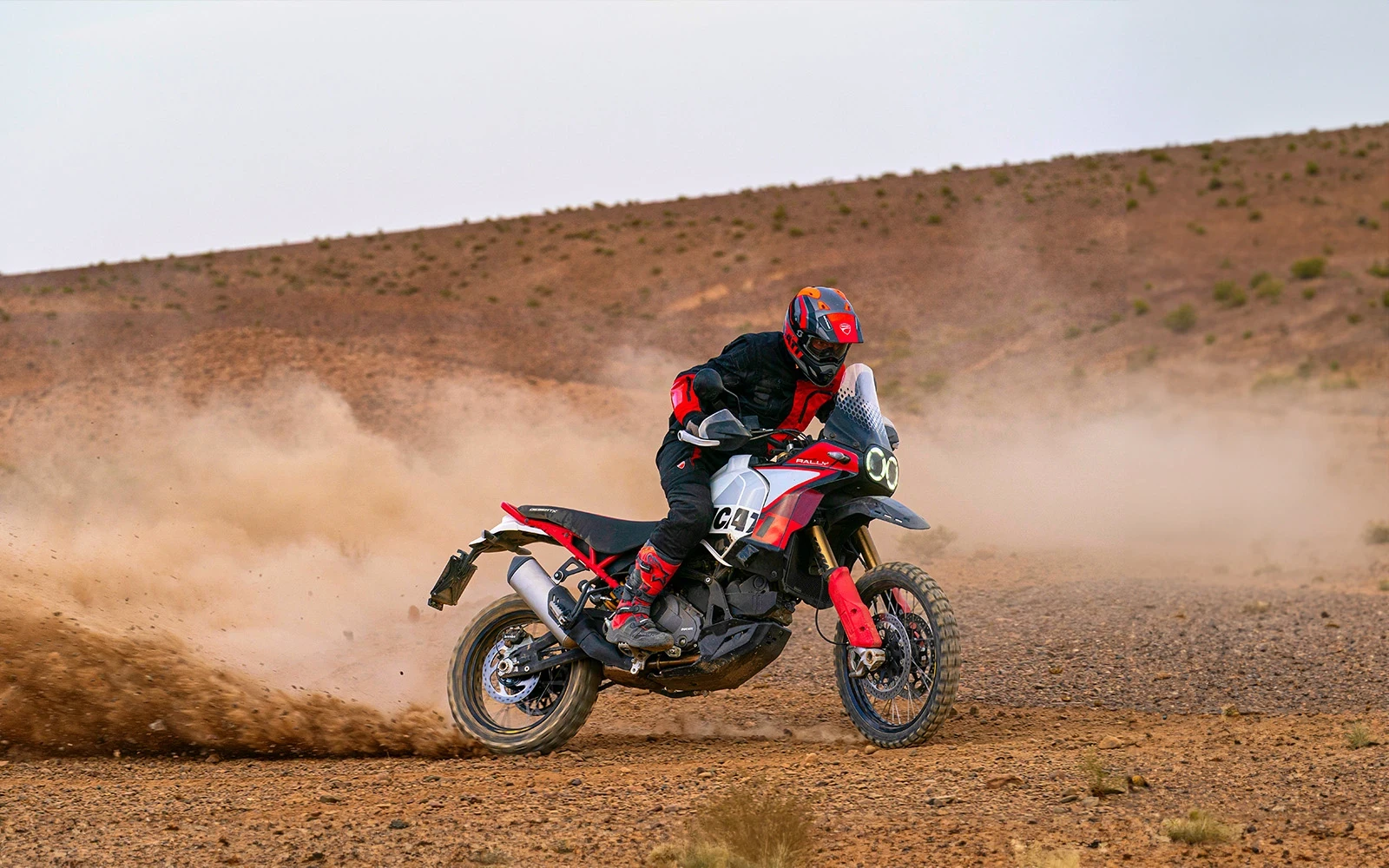
Both Rally versions have a 48mm closed-cartridge KYB fork and an adjustable KYB rear shock. The 2027 chassis changes to an aluminium monocoque and a Full Floater progressive rear linkage, while the 2026 retains a tubular-steel trellis frame. The new linkage is a real design change, but extra suspension travel is not part of this generation-to-generation upgrade. Both also include an adjustable Öhlins steering damper.
The wheel change is more immediately useful to understand. Both use a 21-inch front and 18-inch rear, with Pirelli Scorpion Rally STR tyres as standard. The 2026 Rally's Excel rims use inner tubes; the 2027's Excel wheels are tubeless. That changes the puncture-repair equipment and techniques a rider needs. The new bike also lowers the standard seat from 910mm to 900mm, though both list 880mm with the optional low seat.
The smaller tank is part of the weight gap
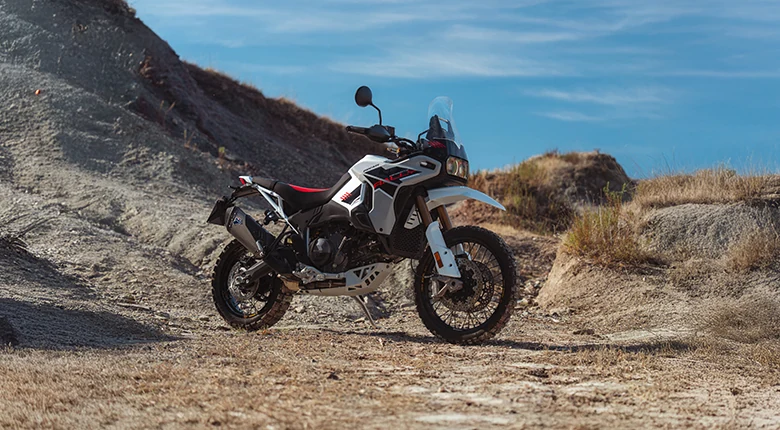
The weight saving is modest on the same manufacturer basis: 209kg without fuel for the 2027 bike against 211kg for the 2026. Our full-tank estimates put the gap at about 4.2kg, but roughly 2.2kg of that comes from carrying less petrol. The new tank holds 18 litres against 21 litres. Riders who value that extra on-board capacity have a clear reason to keep the 937 on their shortlist.
Other changes go beyond the engine and frame. The 2027 Rally gets a titanium Termignoni silencer and a 4mm aluminium engine guard; the 2026 uses a stainless-steel silencer and forged-carbon sump guard. Front brake discs shrink from 320mm to 305mm, with Brembo monobloc calipers and cornering ABS on both. Disc diameter alone does not establish which brake system works better on loose ground.
Equipment, prices and the choice
Cruise control, an up/down quickshifter and traction, wheelie and engine-brake controls are already part of the 2026 package. The 2027 adds DQS 2.0, which reads a sensor on the gear drum rather than using the previous external microswitch, plus a horizontal 5-inch TFT and two USB ports. These are useful equipment distinctions, without making the old Rally a stripped-out alternative.
In the US, Ducati lists the 2027 Rally at $19,995 and the 2026 at $23,395, each plus $995 destination. The new bike's advertised price is therefore $3,400 lower before other charges; a dealer's actual selling price can differ. In Italy, the full-power 2027 starts at €19,990 including 22% VAT.
The 2027 is the more persuasive new-bike purchase if its tubeless wheels, 900mm seat and 45,000km valve-check interval match your priorities, especially at the lower advertised US price. The 2026 still makes sense if its 21-litre tank matters more to your trips and the actual purchase price works for you. There is little peak-output incentive to replace a 937 you already own.