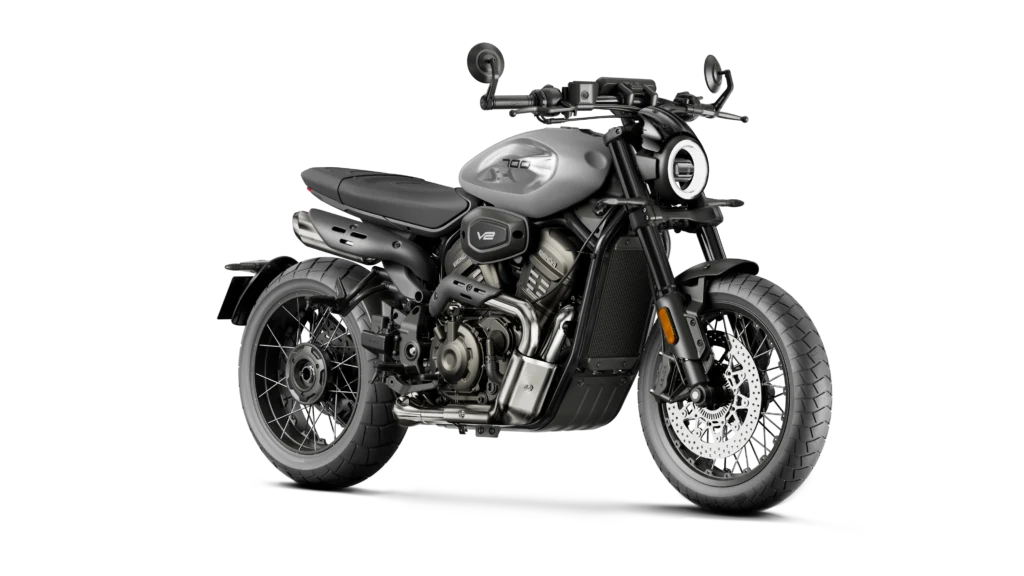
Benda's Vinster 700 and Vinster X 700 turn the same 692cc V-twin platform into two different roadster propositions. Revealed at EICMA 2026 in Milan, the Vinster 700 pairs a 17-inch front wheel with a relatively stripped-back layout; the X gets a 19-inch front wheel and touring-oriented equipment. The distinction is in their dimensions and fittings, rather than a different engine or underlying frame.
What changes on the X
The most important difference for a prospective rider may be the seat. At 830mm, the Vinster 700's is 35mm lower than the X's 865mm perch. Both use a 170/60-17 rear tyre, while the front changes from 120/70-17 to 120/70-19 on the X. Wheelbase also grows slightly, from 1,510mm to 1,518mm. Those are tangible differences to consider before choosing between the two silhouettes.
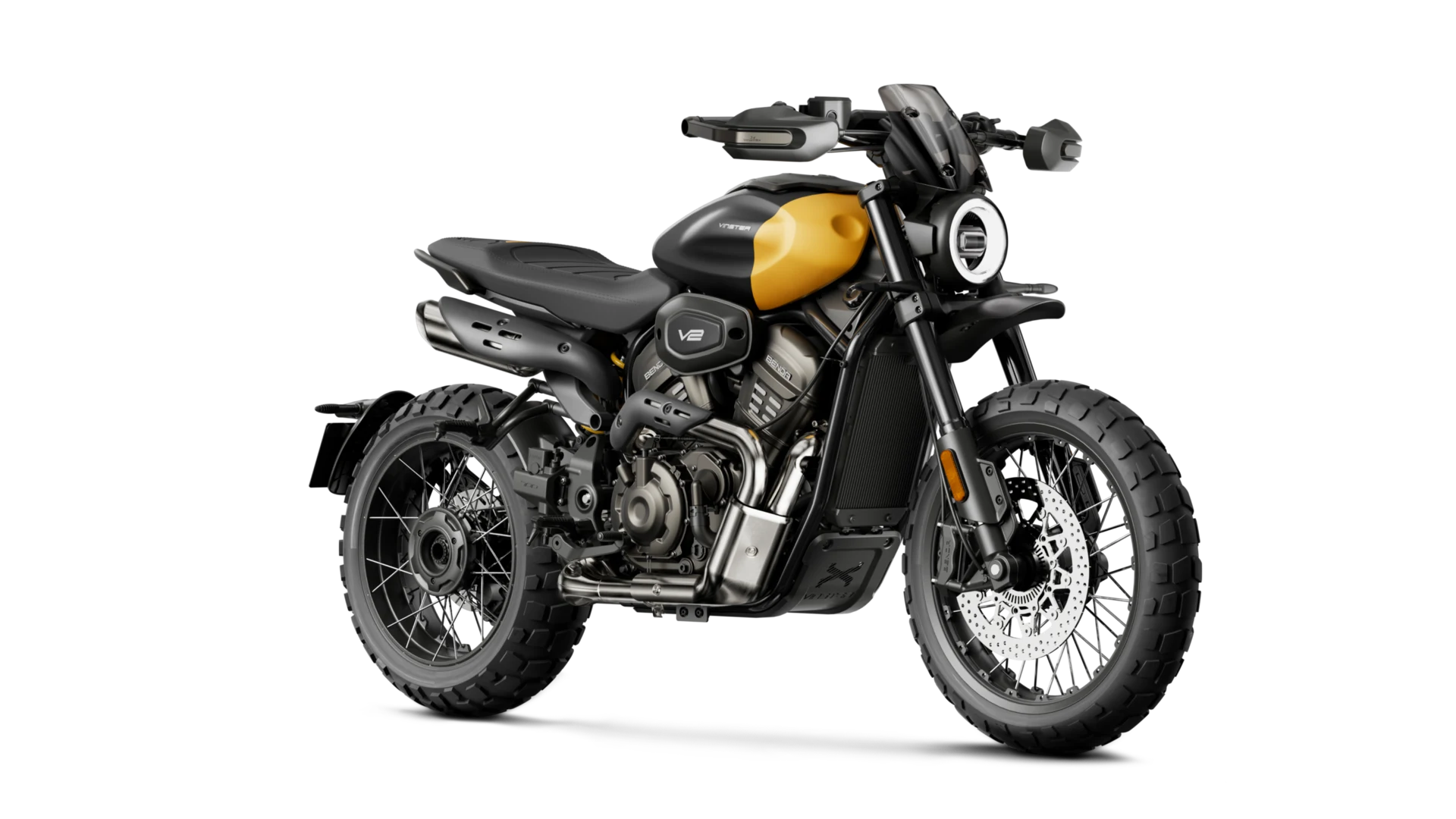
The X adds a windscreen, handguards, tank rack, skid plate and high-mounted front mudguard. That gives it a more travel-minded specification without changing fuel capacity: both carry 15 litres. Benda claims curb weights of 195kg for the Vinster 700 and 200kg for the X, so the taller, more equipped version adds 5kg.
The same V-twin in both
The shared engine is a liquid-cooled, 65-degree V-twin displacing 691.66cc, from the engine family also used in Benda's Rock 707 and Capra 700. Claimed output is 72.4hp (54kW) at 9,000rpm, with peak torque of 68Nm at 6,500rpm. Neither Vinster gets a separate output figure: choosing the X does not buy a more powerful version of the twin.
Both have a six-speed gearbox, wet multi-plate slipper clutch and chain final drive. The mechanical layout is also central to their appearance. Rather than enclosing the engine, Benda leaves it exposed beneath the bodywork, with high-mounted dual exhausts and a long, flat seat completing the shared design.
Shared chassis, not extra suspension travel
A double-cradle frame and single-sided aluminium swingarm underpin both bikes. Suspension is shared too: an upside-down fork offers 135mm of travel, while the hydraulic rear shock provides 120mm of rear-wheel travel. The X's larger front wheel and protective equipment therefore do not come with a longer-travel suspension specification. Its rugged styling is a clear distinction, but not a reason on its own to treat it as an off-road motorcycle.
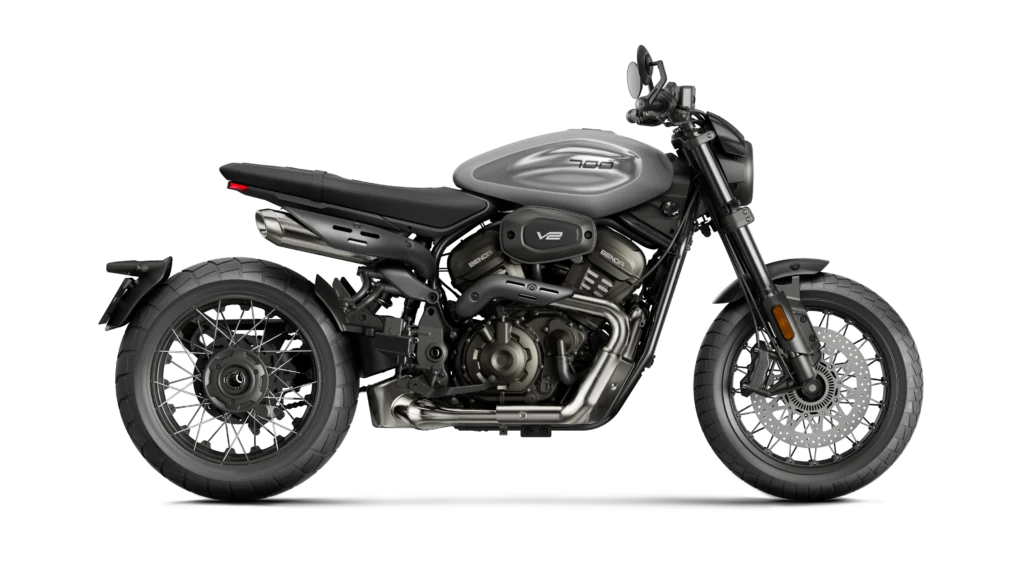
Braking equipment follows the same common-platform approach. Both use a radial four-piston front caliper and a two-piston rear caliper, with discs at each end and two-channel ABS. There is no braking-hardware distinction between the two in the reveal specification.
Equipment and the buying decision
Everyday equipment includes a landscape-format TFT display and both USB-A and USB-C charging ports. Each bike has a round LED headlight; the Vinster 700's surrounding illuminated ring adds to its neo-retro appearance. The charging provision is a useful detail on either version, rather than something reserved for the touring-styled X.
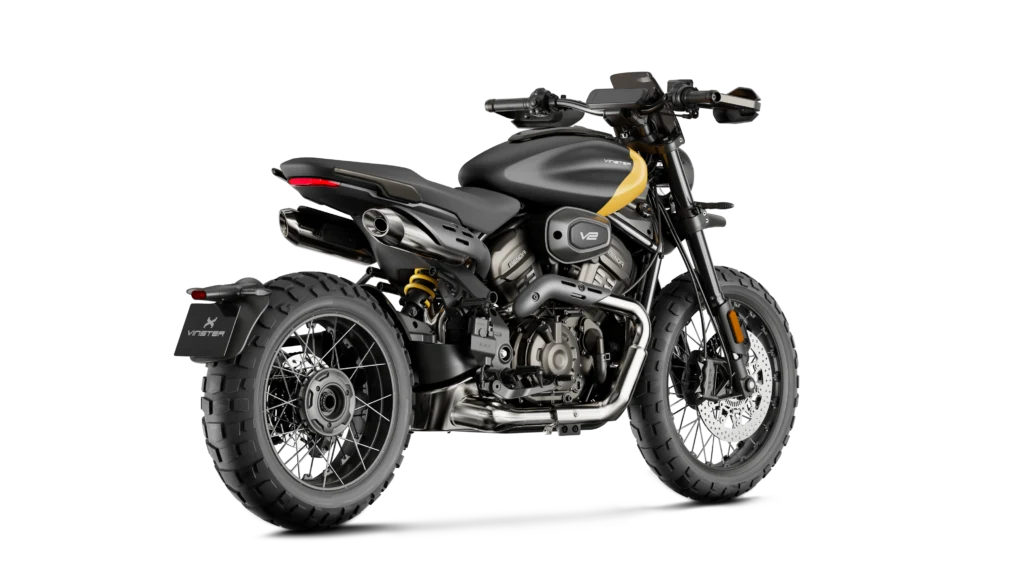
Taken together, the changes make this a choice between two interpretations of the same machine rather than two substantially different chassis packages. The Vinster 700 keeps the lower seat and simpler outline. The X adds height, a larger front wheel and more equipment around the rider, while retaining the exposed V-twin, flat seat and distinctive single-sided rear end.
The reveal specifications remain provisional and subject to homologation. French prices and launch dates, along with US pricing and availability, are still to be confirmed.