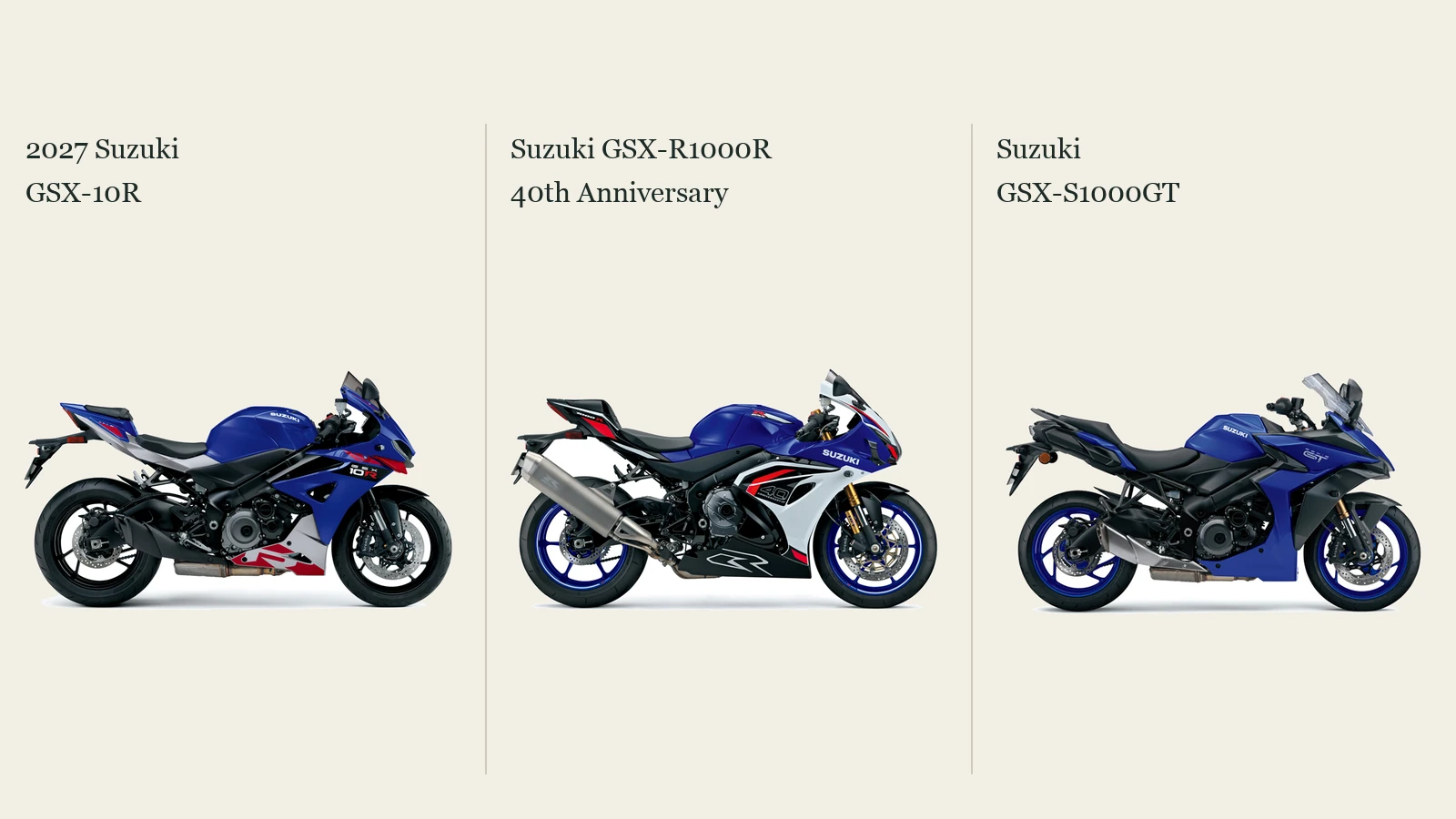
Suzuki's GSX-10R puts its familiar long-stroke litre four into a properly committed sports bike. That makes the choice between Suzuki's three faired thousands more interesting than a simple horsepower ladder: the new 10R combines a GSX-R1000R-style riding position with road conveniences, the GSX-R1000R brings a different engine and more circuit adjustment, and the GSX-S1000GT keeps the upright posture and luggage provision that matter on a long trip.
| Specification | 2027 Suzuki GSX-10REuropean specification; 2027 preview | Suzuki GSX-R1000R 40th AnniversaryEuropean specification; Germany 2026 / US 2027 prices | Suzuki GSX-S1000GTEuropean base GT; Germany 2026 / US 2027 GT+ prices |
|---|---|---|---|
| Engine | 999cc liquid-cooled DOHC inline-four; K5-derived | 999.8cc liquid-cooled DOHC inline-four; variable intake timing | 999cc liquid-cooled DOHC inline-four; 73.4 × 59.0mm bore/stroke |
| Claimed power | 150hp (112.0kW) | 192hp (143.5kW) | 150hp (112.0kW) |
| Claimed torque | 106.0Nm | 110.0Nm | 106.0Nm |
| Transmission / clutch | Six-speed; assist/slipper clutch; up/down quickshifter | Six-speed cassette gearbox; assist/slipper clutch; up/down quickshifter | Six-speed; assist/slipper clutch; up/down quickshifter |
| Manufacturer weight | 214kg curb mass | 203kg curb mass | 226kg curb weight; base GT |
| Front / rear suspension | 43mm KYB USD fork / linked shock; both fully adjustable (EU) | Showa BFF fork / BFRC-lite shock; adjustable swingarm pivot | 43mm KYB USD fork, fully adjustable / shock with preload and rebound adjustment |
| Brakes | Twin 310mm front discs; Brembo monobloc calipers; radial master cylinder; cornering ABS | Twin 320mm front discs; Brembo monobloc calipers; cornering ABS | Twin 310mm front discs; Brembo monobloc calipers; ABS |
| Wheels / tyres | 17-inch; 120/70 front, 190/55 rear | 17-inch; 120/70 front, 190/55 rear | 17-inch; 120/70 front, 190/50 rear |
| Seat height | 810mm | 825mm | 810mm |
| Fuel capacity | 18.0 litres | 16.0 litres | 19.0 litres |
| US price | 2027 GSX-10R: price to be confirmed | $17,939 + $750 destination — 2027 40th Anniversary; tax/fees extra | $14,599 + $750 destination — 2027 GT+ with side cases; tax/fees extra |
| European price | 2027 GSX-10R: German price to be confirmed | €20,579 including delivery / €19,990 before delivery — Germany, 2026 40th Anniversary | €14,079 including delivery / €13,490 before delivery — Germany, 2026 base GT offer |
European engine and chassis specifications. GSX-10R is the 2027 model; current German prices cover 2026 R 40th Anniversary and base GT, while US prices cover 2027 R 40th Anniversary and GT+. Weights retain Suzuki’s quoted curb definitions. The German GT offer ends 31 December 2026 at participating dealers; delivery charges can vary.
Two engine families
The GSX-10R's 999cc engine traces its architecture to the K5 GSX-R1000 through the GSX-S1000 family. Its 73.4 × 59.0mm bore and stroke and 12.2:1 compression ratio match the GT's long-stroke format. Both European specifications make a claimed 150hp (112kW) at 11,000rpm and 106Nm at 9,250rpm. The new bike's fairing therefore does not bring a higher peak output than the tourer; its differences lie in the chassis, rider triangle and control systems.
The current GSX-R1000R is a separate proposition. Its 999.8cc four uses a 76.0 × 55.1mm bore and stroke, 13.8:1 compression, finger-follower valve gear, variable intake-cam timing and a second set of injectors feeding from above the intake funnels. European output is a claimed 192hp (143.5kW) at 13,200rpm, with 110Nm of peak torque. That is a substantial increase in peak power at a higher engine speed, rather than the 10R's engine with a more aggressive map. All three have a six-speed gearbox, an assist/slipper clutch and an up/down quickshifter.
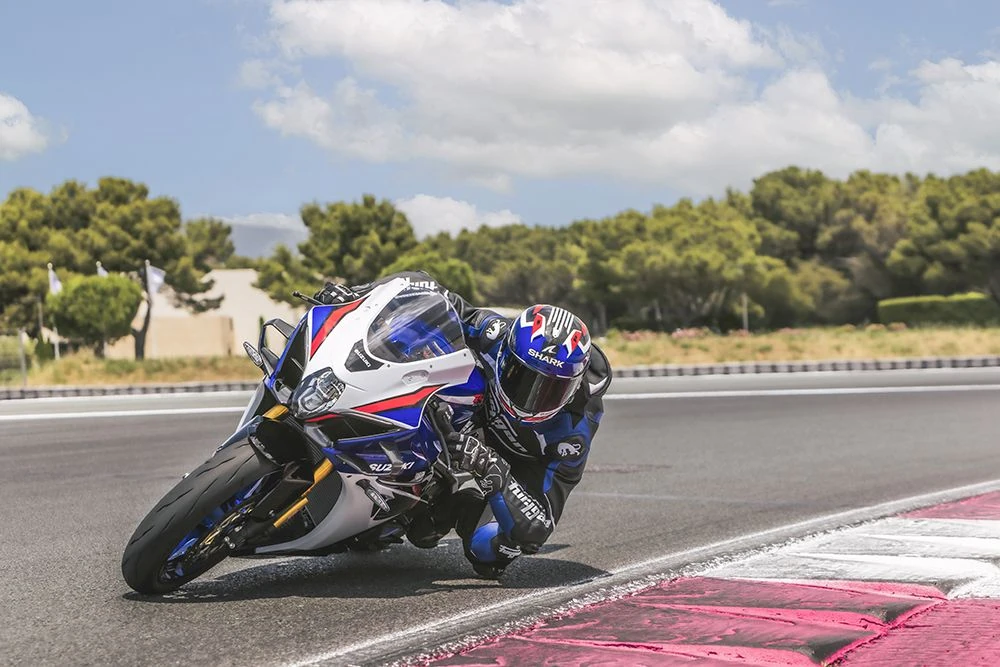
Riding position and chassis adjustment
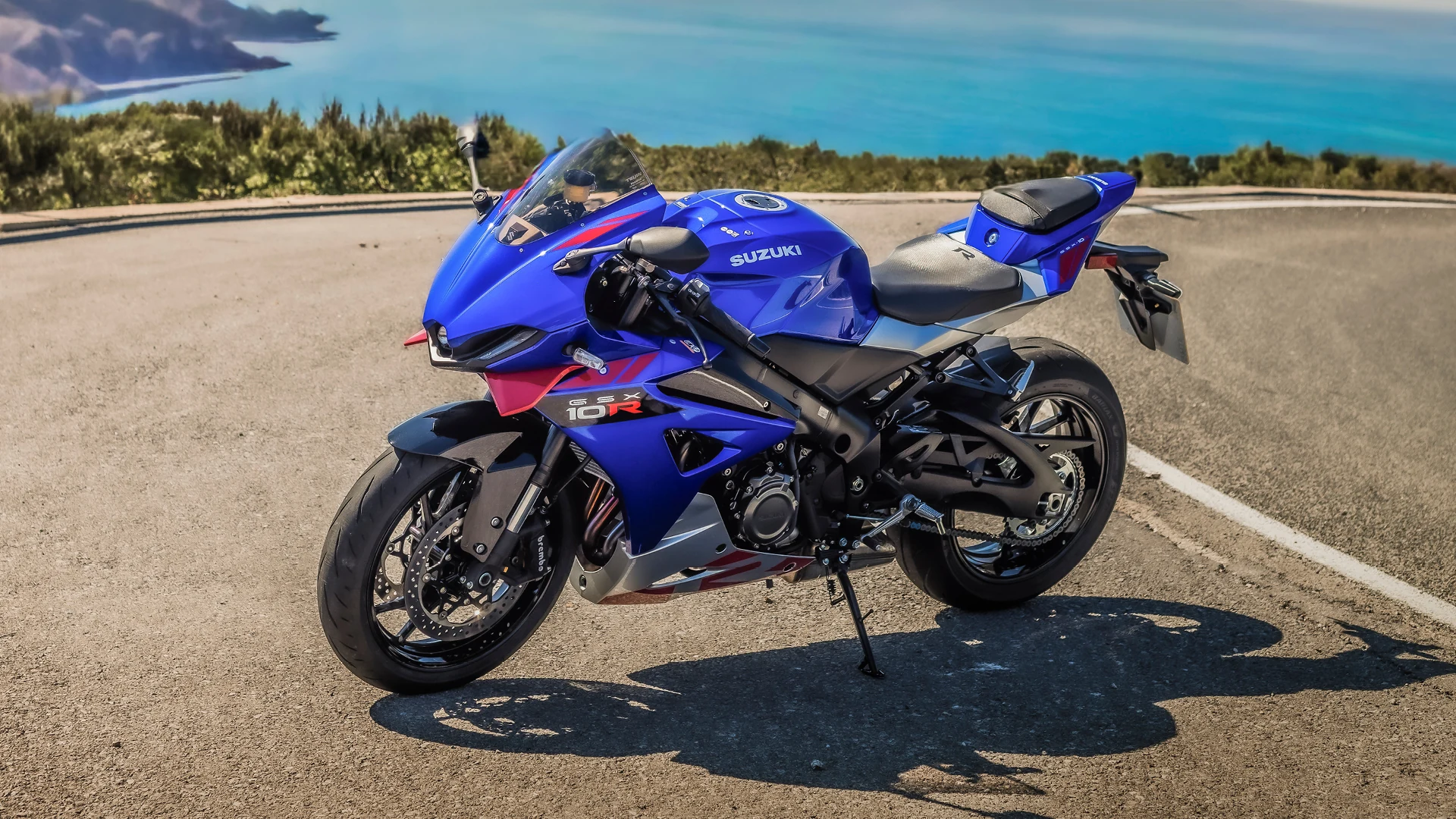
Nor is the GSX-10R an upright GT in sharper bodywork. Suzuki describes its forward-leaning riding triangle as equivalent to the GSX-R1000R's, with new seat rails and higher, more rearward footrests than the GSX-S1000. The flatter seat gives room to move fore and aft, while the padding is softer than the GSX-R1000's. Its 810mm seat is lower than the R's 825mm, but riders looking primarily for an upright position should start with the GT, which also has an 810mm seat.
The 10R has a fully adjustable 43mm KYB fork and, in European specification, a linked rear shock with preload, rebound and separate high- and low-speed compression adjustment. The GT also has a fully adjustable 43mm KYB fork, but its rear shock adjusts for preload and rebound. Up front, both use Brembo monobloc calipers and 310mm discs; the 10R adds a radial master cylinder. Its 190/55 rear tyre has a taller profile than the GT's 190/50. These are useful hardware distinctions for a rider planning to alter the setup between road use and track days.
The R goes further with Showa BFF front suspension, a BFRC-lite rear shock and a swingarm pivot whose position can be changed for competition setup. Its front Brembo calipers work on 320mm discs. A rider who plans to change chassis geometry for circuit use therefore has a concrete reason to shortlist the R beyond its engine output. Its 16-litre tank is the smallest here; the 10R carries 18 litres and the GT 19.
Functions that suit different rides
The GSX-10R's electronics combine sports and everyday functions. Its IMU feeds cornering-sensitive controls, while the package includes slide control, engine-brake adjustment, launch control, cruise control and brake hold that also works on level ground and downhill. Suzuki counts 15 electronic control features. The useful question is which functions suit the ride: brake hold and cruise address a different need from the R's adjustable swingarm pivot. The R has its own IMU-supported traction, lift and roll-torque controls and cornering brake system; the count alone cannot tell us which intervention feels better.
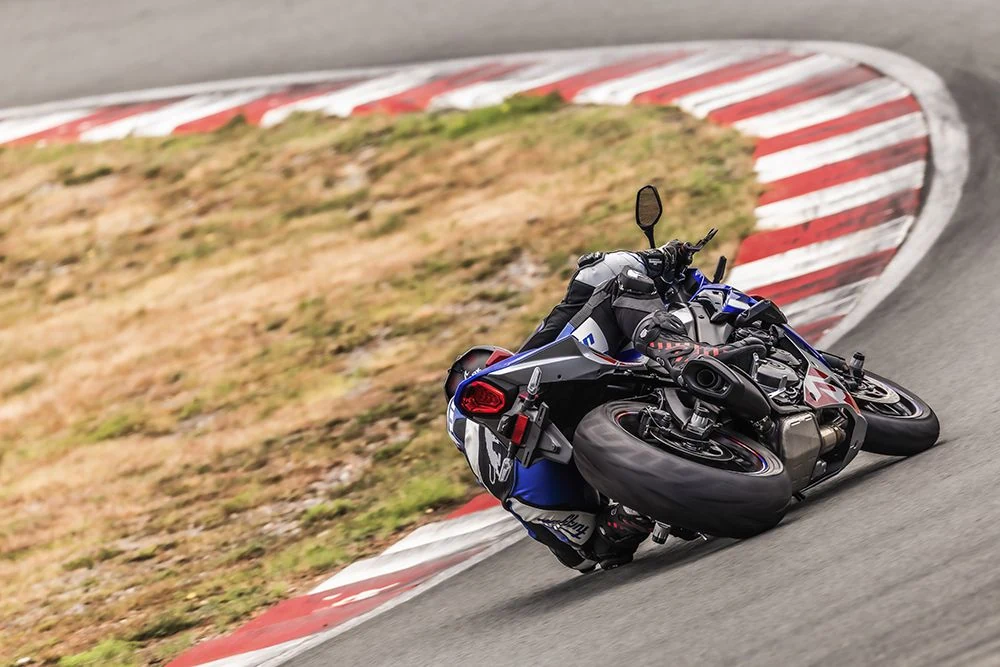
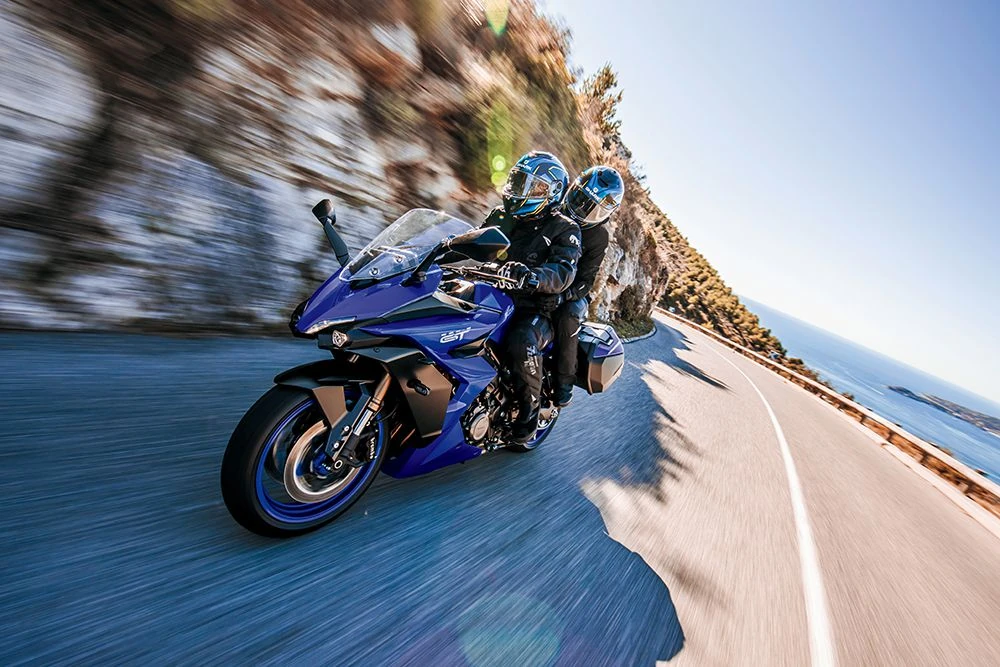
For regular two-up trips, the GT's upright bars, shaped screen, passenger accommodation and luggage arrangements are stronger reasons to choose it than its engine output. Cruise control and the quickshifter are standard, and its 6.5-inch connected TFT is larger than the 10R's 4.2-inch screen. The R uses an LCD dash. Side cases are optional on the European base GT shown here; they are standard on the US GT+. The 10R offers useful travel equipment, but its sports riding position remains central to the package.
Current prices and the wait for the 10R
In the US, the 2027 GSX-R1000R 40th Anniversary Edition starts at $17,939 and the 2027 GSX-S1000GT+ at $14,599, each plus $750 destination and applicable taxes and fees. The GT+ price includes side cases. The GSX-10R's US and German prices are still to be confirmed, so its case as the cheaper sports-bike choice remains open. Suzuki plans to begin sales in various markets from summer 2027.
Germany's current choices are the 2026 GSX-R1000R 40th Anniversary Edition, listed at €20,579 including delivery, and the 2026 base GT, advertised at €14,079 including delivery under Suzuki's Red Deals offer. Before delivery, those figures are €19,990 and €13,490. The GT offer runs through 31 December 2026 at participating dealers; its regular list price before delivery is €14,390. It is a base GT offer, rather than a European equivalent of the pannier-equipped US GT+.
The choice turns on what you want to carry and how you want to sit. The GT is the clearest fit for upright, luggage-equipped touring. The R is the more focused choice when higher peak power and competition chassis adjustment justify the price. The 10R is worth waiting for if you want the long-stroke four, a sports riding position and the newer mix of cornering and convenience controls. Its final price will determine how compelling that combination is.